
Why hydration is what makes plant color last
September 16, 2026
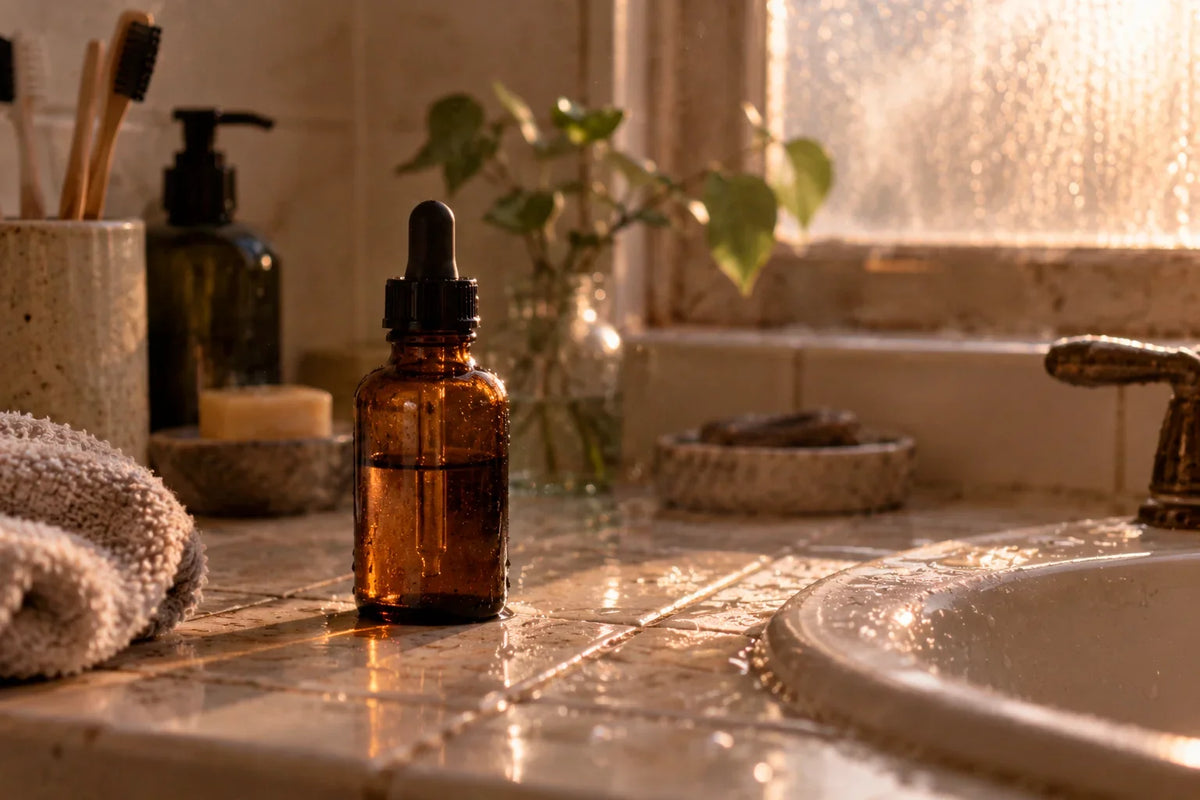
People tend to think of color longevity as something decided on coloring day. It is mostly decided in the weeks after, by how well the hair holds moisture.
Plant pigment sits in and on the cuticle. When the cuticle is smooth and closed, the pigment stays put. When it is lifted and dry — from sun, salt water, chlorine, hot tools — the pigment washes out faster and the color goes flat. So a color-care routine is really a hydration routine.
Before you wash: oil, once a week
An oiling ritual before shampooing is an old Ayurvedic habit and it earns its place. Work a cold-pressed botanical oil through dry lengths, leave it while you do something else, then shampoo as usual.
Any of the three work. Almond and Lavender is the all-rounder. Almond Oil with Myrrh suits hair that feels rough at the ends. Grape Seed and Petit Grain is the lightest of the three, which matters if your hair goes limp easily.
The point is not to nourish in the abstract. It is that oiled hair swells less in the shower, and hair that swells less loses less pigment down the drain.
After every wash: a conditioner that matches your shade
Two of our conditioners carry botanical pigment of their own, so they top up the color a little at every wash while they seal the cuticle.
- Blonde and light hair — Chamomile and Rhubarb Conditioner. Rhubarb holds the brightness that light plant color tends to lose first.
- Brunette and dark hair — Walnut and Sage Conditioner. Walnut keeps the depth from turning dusty.
If your hair is long, curly or simply thirsty, the Orange and Shea Detangler does the same sealing job without a color bias, and can be left in.
What actually fades color
UV, salt water and chlorine, in that order. None of them are avoidable if you have a life, but an oil through the lengths before the beach or the pool gives the pigment something to hide behind. The Hair Protection Serum exists for exactly that.
Results vary with your starting shade, your porosity and how much gray you have. See our Plant Color and Patch Test Notice.