
Five things that change your plant color result
September 16, 2026
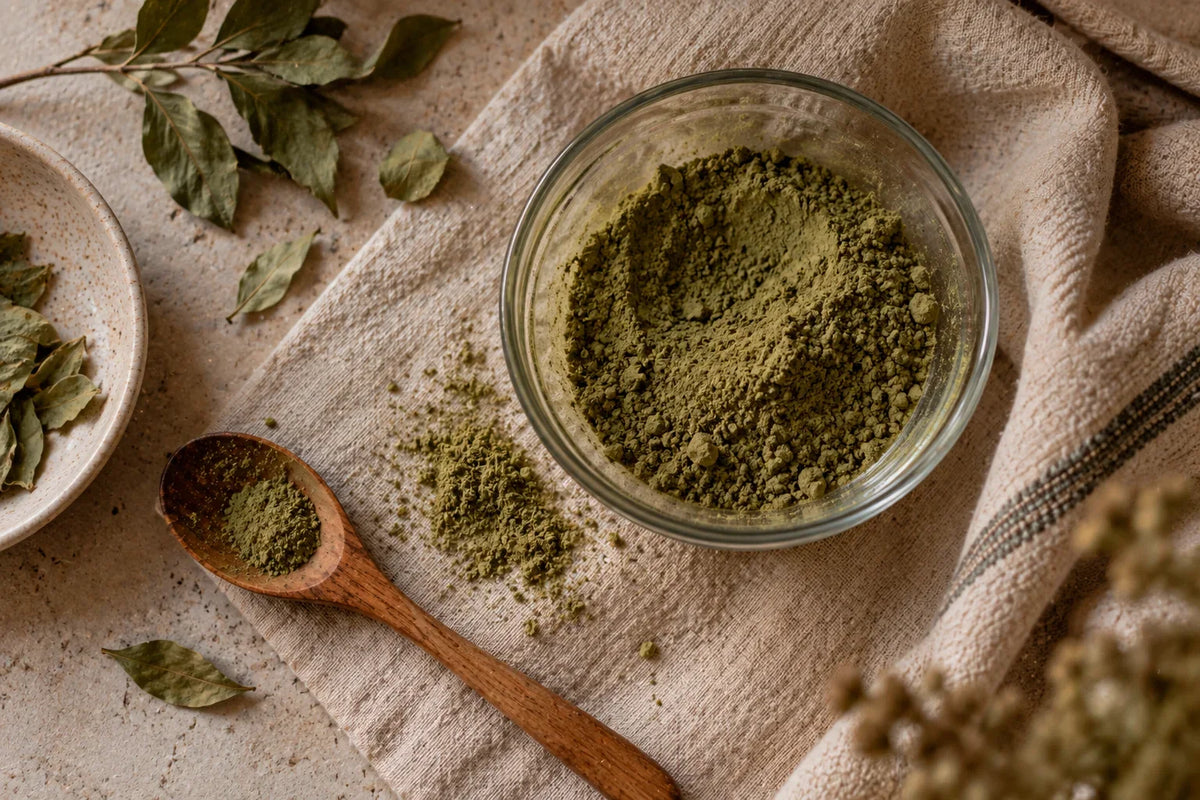
Plant color does not lighten hair and it does not strip what is already there. It lays pigment over your existing color. That makes it gentler than a chemical dye, and also less forgiving about everything that happens in the hours around the application. Five things account for most of the difference between a result you love and one you shrug at.
1. Start with hair that can absorb
Silicone, styling residue and hard-water minerals sit on the cuticle and block pigment. Wash once with a sulfate-free bar such as the Green Tea Shampoo Bar or the Coconut Shampoo Bar to clear the buildup without stripping the scalp.
A few days later — not the same day — use a hair oil as a mask. The Almond and Lavender Oil works well here. The fats help the pigment sit rather than slide off, and they keep the lengths from drinking the color unevenly.
2. Use enough product
Under-dosing is the single most common reason a result comes out patchy. Saturation matters more than technique.
| Hair | Boxes |
|---|---|
| Very short | ½ |
| Short, above the shoulders | 1 |
| Medium length, fine | 1 |
| Medium length, thick | 1½ |
| Long, fine | 1½ |
| Long, thick | 2 |
Mixed more than you need? Freeze the surplus and use it within a month.
3. Mix it properly
Use a non-metal bowl, a brush, disposable gloves and a turban you do not mind staining. Aim for the texture of hot chocolate — thick enough to cling, loose enough to spread.
Stir in three tablespoons of hair oil. It sounds like a lot. It is the difference between pigment that adheres and pigment that rinses away.
4. Apply in sections, and be generous at the roots
Divide the hair and work section by section until every strand is properly coated. If you are more than half gray, put noticeably more product at the roots — and expect that a second application may be needed to reach full coverage. Gray hair has no pigment of its own for the color to build on, so it takes the deposit differently from the rest.
5. Give it an hour, then leave it alone for two days
Process for about an hour with the hair wrapped. A reusable turban holds in the warmth, and warmth is what opens the cuticle. Heat is not optional here — it is part of the chemistry.
Then do not wash your hair for 48 hours. Plant pigment keeps developing and settling after you rinse. Washing on day one, or reaching for heat styling and harsh products, interrupts that and costs you both depth and longevity.
Before you color: do a patch test 48 hours ahead, every time, including if you have used the product before. See our Plant Color and Patch Test Notice.